

Private Label vs White Label Clothing: Which Is Right for Your Brand?
Private label or white label clothing? Compare control, cost, minimums and speed, with a checklist to choose the right route for your brand.
On this page
- What is white label clothing?
- What is private label clothing?
- White label vs private label: side by side
- The middle ground: it is a spectrum, not two boxes
- Pros and cons of white label clothing
- Advantages
- Disadvantages
- Pros and cons of private label clothing
- Advantages
- Disadvantages
- Why costs and minimum orders differ
- How to choose: a practical checklist
- What changes for Gulf and modest wear brands
- Protecting your designs and your brand
- Quality control: the part that decides whether it works
- What to do next
- Frequently asked questions
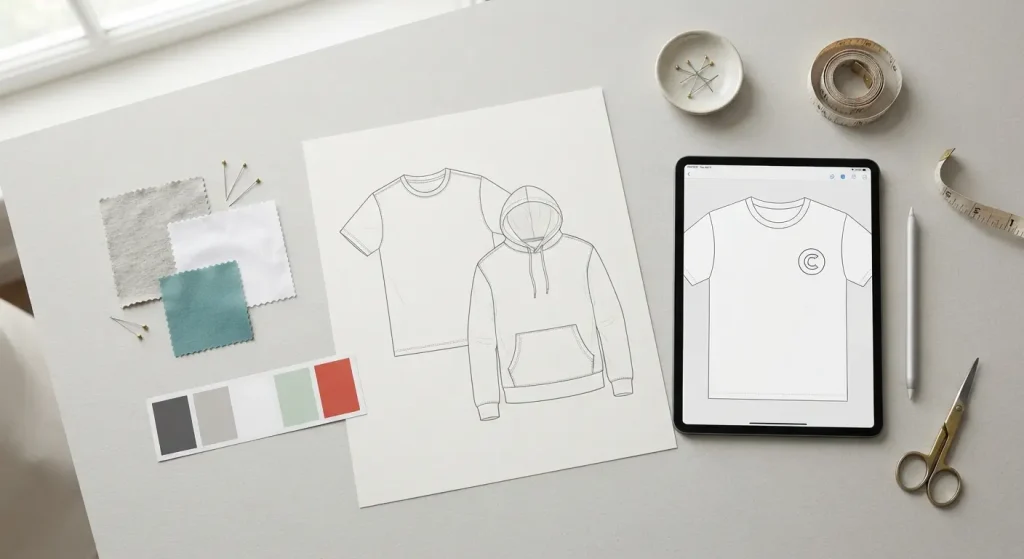
Quick answer: White label clothing is a ready-made garment that a factory also sells to other brands, with your label added. Private label clothing is made for you and sold only under your brand, from a light customisation of a factory’s base design up to a fully custom piece. White label is faster and needs less money. Private label gives you a product no one else has. Most new brands start somewhere in between, and the right choice depends on your budget, your timeline and how distinctive the collection has to be.
If you are launching a clothing brand, one of your first decisions is not which fabric or which colour. It is how the product gets made. Do you buy something that already exists and put your name on it, or do you have a factory make something for you?
That is the difference between white label and private label. Both mean a factory makes the garment and your brand sells it. Where they differ is control, exclusivity, cost and speed. This guide is written for fashion founders and boutique owners in the Gulf and beyond who are about to approach factories, and it uses clothing examples throughout, because most advice on this topic is written for electronics, cosmetics or software.
Who this guide is for: founders, designers and boutique owners who have a brand idea and have not yet chosen a factory. If you already know your factory and your tech pack, you can skip to the checklist.
What is white label clothing?
White label clothing is a finished, ready-made garment that a factory produces and offers to several brands. The design, the pattern and the fabric are the factory’s. You choose from what exists, and the only things that change are the label, the hang tag and sometimes the packaging.
Plain basics are the classic example: t-shirts, hoodies, plain knitwear and simple dresses. Two brands can sell the same garment under different names, and neither of them owns the design.
The appeal is simple. There is no design work, no pattern making and no sampling from scratch, so you can have a product on sale quickly and with a small budget. The trade-off is that your product is not unique, and a competitor can offer the same piece.
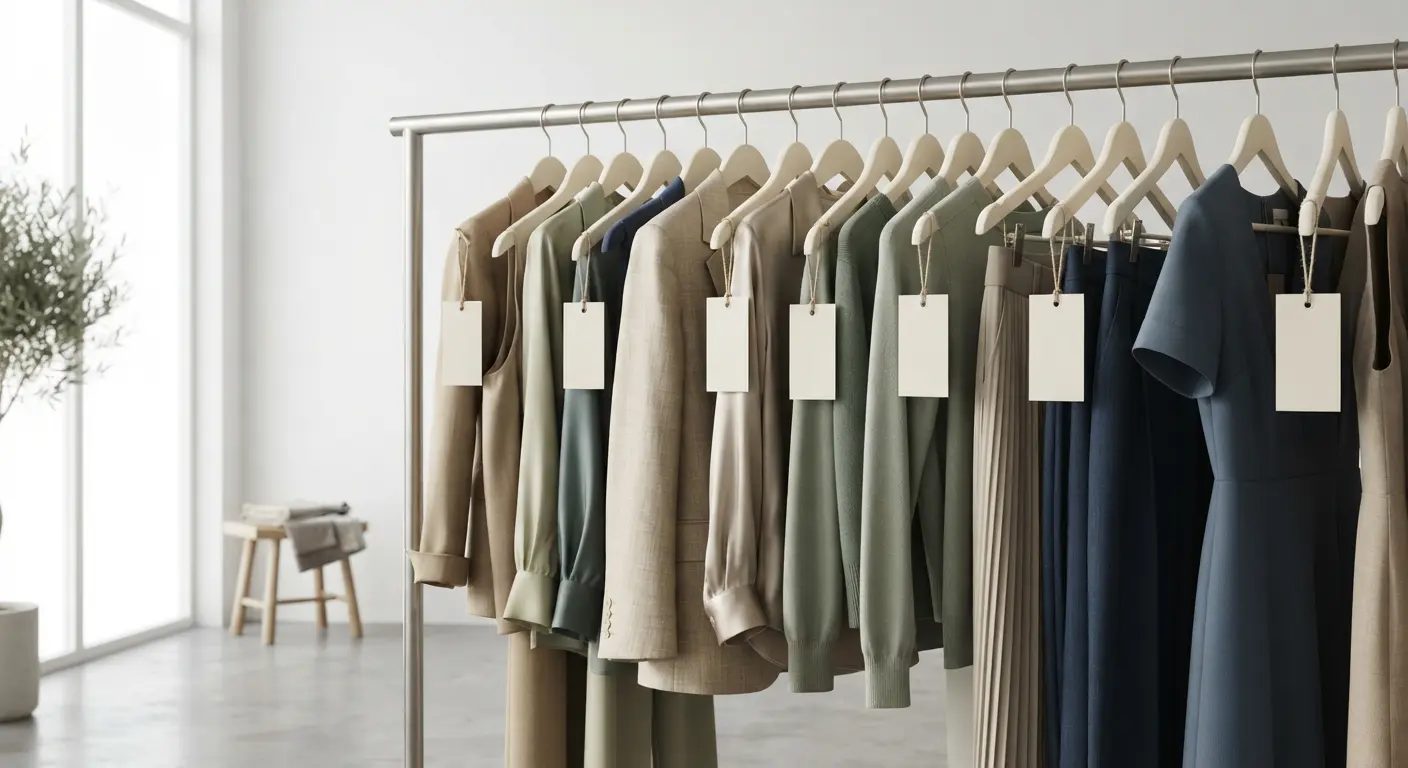
What is private label clothing?
Private label clothing is made for you, to your instructions, and sold only under your brand. A factory produces the garment, but the product belongs to your brand and is not offered to other buyers.
In practice, “private label” covers a wide range. At one end, you take a factory’s existing base design, a block, and change the details: the neckline, the length, the fabric, the trims, the labels. At the other end, you bring your own tech pack and have the factory build a design that did not exist before. Both are called private label, and different factories use the words differently, which is why it pays to ask exactly what a factory means.
The appeal is control and exclusivity. You decide the fit, the fabric and the finish, and nobody else sells your design. The trade-off is more development work, more sampling, and usually higher minimum order quantities and costs than buying something ready-made.
White label vs private label: side by side
| Question | White label | Private label |
|---|---|---|
| Who designs the garment? | The factory | You, or you and the factory together |
| Is the product exclusive? | No, other brands can sell the same piece | Yes, made for your brand only |
| How much can you customise? | Labels, tags and packaging, sometimes colour | Fit, fabric, details, trims and finishing |
| Speed to market | Fastest | Slower, because of design and sampling |
| Upfront work and cost | Lower | Higher |
| Minimum order quantities | Usually lower | Usually higher |
| Brand distinctiveness | Low | High |
| Quality control | You inspect a product that already exists | You set the standard and inspect against it |
| Main risk | Competitors selling the same product | Cost, delays and sampling mistakes |
The middle ground: it is a spectrum, not two boxes
Most guides present two options. In clothing manufacturing there are really three levels, and most brands live in the middle one.
- Ready-made with your label. You pick an existing garment and add your branding. This is white label.
- A factory base design with your changes. You start from a proven block, so the fit and construction already work, and you customise the fabric, details, trims and labels. This is the fast route into private label.
- Fully custom from your own tech pack. You supply the design and specifications, and the factory builds it. This is the most exclusive route, and usually the most demanding.
The three levels of clothing production
You will also hear the terms ODM and OEM. In simple terms, ODM means the factory supplies the design and you brand it, and OEM means you supply the design and the factory produces it. They map closely to levels two and three.
At Fabusse, the two routes are offered as separate services. Private Label is for brands that want to apply their own branding, labels and minor modifications to existing, high-quality factory base blocks for a faster launch. Fashion Sourcing is for brands with their own tech packs and unique silhouettes that need a factory with dedicated capability.
Pros and cons of white label clothing
Advantages
- Speed. You can sell sooner because the product already exists.
- Lower upfront cost. No pattern making and no design development.
- Lower risk. You can see and test an existing garment before you order.
- A way to test the market. You learn what your customers buy before you invest in your own designs.
Disadvantages
- No exclusivity. Anyone can buy the same garment from the same factory.
- Limited control. Fit, fabric and detail are what the factory already makes.
- Weaker brand story. It is hard to build a distinctive brand around a product everyone can have.
- Price pressure. If competitors sell the same piece, the market tends to compete on price.
Pros and cons of private label clothing
Advantages
- Exclusivity. Your design is yours, so your collection stands apart.
- Control over fit and fabric. This matters a great deal in categories such as abayas and modest wear, where drape, coverage and fabric weight are the product.
- Stronger brand and margins. A distinctive product supports a distinctive price.
- A foundation you can grow. Patterns and specifications you own can be reused season after season.
Disadvantages
- More development work. Design, sampling and fit approvals take time and several rounds.
- Higher upfront cost and minimums. Setting up production for a unique product costs more than relabelling an existing one.
- More ways to go wrong. A vague brief or an incomplete tech pack leads to the wrong sample.
- It demands a reliable factory. You need one that follows specifications and keeps quality consistent across batches.
Why costs and minimum orders differ
It helps to understand why the two routes cost differently, so you can judge quotes properly. A factory has fixed costs on every production run: making the pattern, setting up the machines, cutting, and in many cases a minimum amount of fabric that the mill itself requires. Spread those costs across a large run and each garment is cheap. Spread them across a small run and each garment costs more.

With white label, those costs are shared across all the brands buying the same garment, which is why minimums tend to be lower. With private label, your order carries the setup of your own product, which is why minimums and unit costs tend to be higher. Using a factory’s stock fabric and a simple construction usually lowers the minimum, while custom fabric and complex details raise it.
How to choose: a practical checklist
Answer these six questions honestly. They matter more than any definition.
- How much can you invest before the first sale? A small budget points to white label or a light private label customisation.
- How soon do you need to launch? If a season or a campaign is fixed, speed favours ready-made or base-block options.
- How distinctive must the collection be? If your brand story depends on a signature cut or fabric, you need private label.
- Do you have, or can you produce, a tech pack? A complete tech pack makes fully custom production realistic. Without one, start from a base block.
- What volume can you sell? Private label minimums only make sense if you can sell the quantity.
- How much risk can you take? A test collection through white label limits your exposure while you learn.
Which route fits your brand?
Question 1Is your budget small, or do you need to launch quickly?
Question 2Does your brand depend on a signature cut or fabric?
Question 3Do you have a complete tech pack?
- Choose white label if you need to launch quickly, your budget is small and you want to test demand before investing in your own designs.
- Choose private label if your brand depends on a distinctive product, you can commit to the minimums and you are ready for a longer development process.
- Choose the middle route if you want a distinctive product at lower risk: start from a proven factory base design and customise it.
What changes for Gulf and modest wear brands
The choice looks different in categories where cut, coverage and fabric define the product. For abayas, modest wear and occasion wear, the way a garment drapes, how opaque the fabric is, how it behaves in heat and how it fits across sizes are the reasons customers buy. Those are exactly the things white label gives you the least control over.
That is why many modest wear brands use a base block for speed and then invest in private label for their signature pieces. It keeps the launch fast while protecting the part of the collection that makes the brand recognisable.

Protecting your designs and your brand
With white label, there is little to protect, because the design is not yours. With private label, your tech pack, patterns and specifications are valuable, and it is worth setting expectations in writing before you share them: who owns the design, whether the factory may produce it for anyone else, and what happens to your patterns if you move to another factory.
Keep your own copies of every tech pack, pattern and approved sample. This is general good practice and not legal advice, so take professional advice on contracts and intellectual property for your market.
Quality control: the part that decides whether it works
Both routes can fail on quality. White label garments can vary between batches. Private label garments can drift from the approved sample. In both cases, the answer is to check the product at more than one point and against a clear standard.
A solid process inspects raw materials when they arrive, checks garments during production, and runs a final inspection against an AQL standard before anything ships. Fabusse runs bilingual inspection teams at those stages: at raw material receipt, mid-line assembly and final AQL packaging.
What to do next
- Decide your route using the checklist above.
- Prepare your brief. For a base block, collect reference photos and the changes you want. For a custom design, prepare a tech pack.
- Shortlist factories that actually make your category, and ask them exactly what they mean by white label and private label.
- Order samples and test them for fit, fabric and finish before you commit to production.
- Approve a golden sample, then produce and inspect against it.
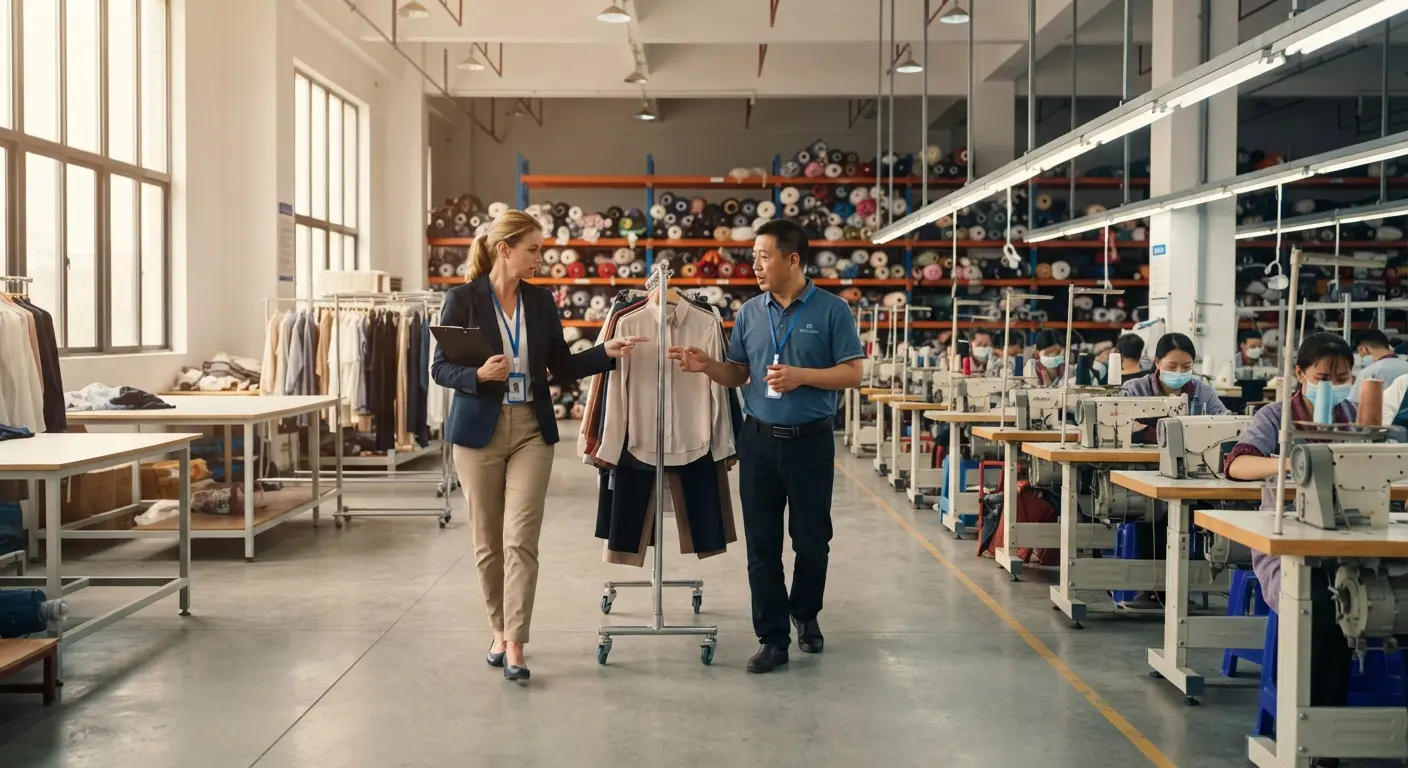
If you would like help choosing the route, or finding factories that suit your category, you can read about our private label and fashion sourcing services or start a project and tell us what you are building. You can also contact the team with a question, read about Fabusse and its founder, or find more guides on our Fashion News page.
Frequently asked questions
Is private label the same as white label?
No. White label is a ready-made product that several brands can sell under their own labels. Private label is made specifically for one brand and sold only by that brand, to a greater or lesser degree customised to that brand’s requirements.
What is the difference between private label and white label clothing?
With white label clothing you choose an existing garment and add your label. With private label clothing you have a garment made for you, from a customised factory base design up to a fully custom piece, and no other brand sells it.
Which is cheaper, white label or private label?
White label is usually cheaper to start because there is no design or pattern development and minimums are often lower. Private label costs more upfront but can support stronger margins because the product is distinctive.
Do I need a tech pack for white label clothing?
Usually not, because the garment already exists. You will need a tech pack for a fully custom private label design, and a clear brief with references for a customised base block.
Can I start with white label and move to private label later?
Yes, and many brands do. White label lets you test demand and learn what your customers buy. You can then invest in private label for the pieces that sell best.
Who owns the design in private label clothing?
It depends on what you agree with the factory. If you supply the design, you should own it. If the factory supplies a base design, the factory usually keeps rights to that base. Put ownership and exclusivity in writing and take professional advice for your market.
Is white label clothing legit?
Yes. It is a common and legal way to start a clothing brand. The risks are practical rather than legal: the same garment can be sold by others, and quality needs checking like any other product.
The bridge between two worlds
Twenty-five years of Gulf fashion expertise, now transformed into a direct bridge to Chinese factories.
Founded by Ramez Basmaji
About Fabusse